
Banquet Speaker
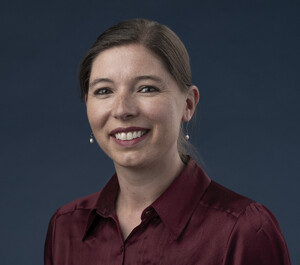
Laura Stonehill
Physics Division Leader and former Director of LDRD
Dr. Stonehill is the Division Leader of LANL’s Physics Division. She earned her PhD degree in nuclear physics from the University of Washington.
Laura Stonehill holds a BA in physics from Pomona College, an MS and PhD in nuclear physics from the University of Washington, and a Leadership MBA from the Center for Creative Leadership and National University. Laura began her career at Los Alamos National Laboratory (LANL) in 2005 as a Director’s Postdoctoral Fellow in Physics Division working on dark matter searches and the Sudbury Neutrino Observatory. She then spent almost a decade in the Space Science and Applications group building hand-held and space-based radiation detection instrumentation and leading projects of varying sizes. In 2016, Laura became program manager for space protection in the Intelligence and Emerging Threats (GS-IET) program office, with responsibility for LANL’s portfolio of space-related work for the intelligence community.
Then in 2018, Laura moved into leadership of LANL’s Laboratory Directed Research and Development (LDRD) program, first as Deputy Program Director, then as Program Director from 2022 to 2025. The LDRD program office
manages a ~$200M portfolio of hundreds of projects investing in cutting-edge, innovative, multi-disciplinary R&D to ensure LANL’s readiness to address emerging science and national security challenges. Since March 2025, Laura has been the Division Leader of LANL’s Physics Division, which comprises approximately 200 scientists, engineers, technologists, technicians, postdoctoral researchers, and students conducting experimental investigations with focus on novel instrumentation and innovative experimental methodologies.
The title of the talk is
My Friend the Neutron
Abstract:
Neutrons are the seemingly simple foundation of nuclear physics and its applications. This talk will briefly discuss the history of the neutron and explore how its discovery reshaped our understanding of matter, leading to impactful technologies such as nuclear reactors and the atomic bomb. Along the way, the talk will introduce the fundamental concepts that govern neutron interactions and detection and will highlight the ways neutrons continue to serve as powerful probes of nuclei and materials. Woven throughout will be stories and reflections from a career as an experimental physicist,
with particular emphasis on the challenges and rewards of detecting neutrons and extracting meaningful signals from complex experiments. The talk will also touch on neutron-focused research in the Physics Division at Los Alamos National Laboratory, illustrating how contemporary experiments build on decades of progress while opening new paths for discovery. This informal presentation will combine physics, history, and personal perspective to convey how neutrons remain both deceptively elusive and scientifically indispensable.
LA-UR-26-28575
Plenary Speakers

Tonmoy Chakraborty
Dr. Chakraborty is an Associate Professor in the Department of Physics and Astronomy at the University of New Mexico. He earned his PhD degree at the State University of New York, Albany.
Tonmoy Chakraborty received his Bachelor of Science in 2004 from the Presidency College at the University of Calcutta, his Master of Science in 2006 from the Indian Institute of Technology (IIT), Roorkee, and his Ph.D. in 2018 from the State University of New York, Albany, New York. He also did a Postdoc in 2020 at UT Southwestern Medical Center, Dallas, Texas.
His research focuses on Biomedical applications and light-sheet-based techniques.
Dr. Chakraborty’s research on developing new imaging platforms, particularly light-sheet-based techniques, extends the spatiotemporal resolution of biomedical imaging by harnessing the synergy among physics, biology, computer science, and engineering.
The title of his talk is
From Cells to Tissues: Bridging Scales with Next-Generation Light-Sheet Microscopy
Abstract: Optical microscopy has transformed our ability to observe life in action—watching cells move, interact, and respond to their environment in real time. Yet, even our most advanced microscopes face critical trade-offs among imaging speed, resolution, and the ability to see deep into intact tissues. These trade-offs become especially challenging when biological events span a huge range of time and space: for example, interactions between cancer cells and their surrounding microenvironment may unfold over seconds or over days, and may occur across entire tissue volumes. To connect these large-scale behaviors with the molecular mechanisms that drive them, we need imaging technologies that can bridge scales—from subcellular structures to whole tissues.
Recent progress in light-sheet microscopy (LSM) has opened the door to deep imaging with reduced photodamage. However, existing LSM platforms still struggle with key limitations, such as restricted sample size, insufficient spatial resolution, and challenges in capturing rapid dynamics. In this talk, I will describe how my laboratory is developing new imaging strategies to overcome these barriers. By engineering next-generation light-sheet and optical remote-focusing systems, we aim to dramatically expand the speed, resolution, and depth at which complex biological systems can be observed. Our long-term goal is to enable studies of living tissues and disease models in truly physiologically relevant 3D environments—moving optical microscopy closer to capturing biology as it naturally unfolds.
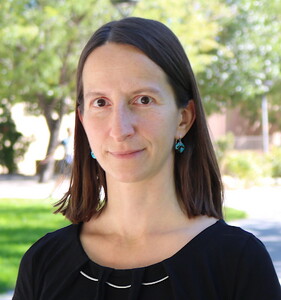
Diana Dragomir
Dr. Dragomir is an Associate Professor in the Department of Physics and Astronomy at the University of New Mexico. She earned her PhD degree at the University of British Columbia.
Dr. Diana Dragomir obtained her PhD in Astronomy from the University of British Columbia in 2013. Before arriving at UNM, she was a postdoctoral scholar, including as a NASA Hubble postdoctoral fellow at MIT. Dr. Dragomir’s research focuses on the demographics of exoplanets as a way to better understand their formation, and place the Solar System in context. She uses data from the TESS and JWST space telescopes as well as from a range of ground-based observatories. She recently received a NSF CAREER award to continue supporting her group’s work. Outside of planet hunting, she enjoys reading, dog agility, and spending time outdoors.
The title of her talk is
Up in the Air, Down to the Detail: Exoplanet Atmospheres with JWST
Abstract: The James Webb Space Telescope has opened a breathtaking new window into the atmospheres of worlds beyond our Solar System. Astronomers are detecting new molecules, probing thermal structure at higher detail than ever before, and beginning to ask whether small rocky planets — the most promising candidates for habitability — hold onto atmospheres at all. In this talk, I will describe how astronomers use JWST to search for and characterize these atmospheres, share some of the surprising results emerging from this work, and discuss what they’re teaching us about how planetary atmospheres form, survive, and evolve. I will also show JWST results from our group’s work characterizing the atmospheres of small, ultrahot exoplanets.
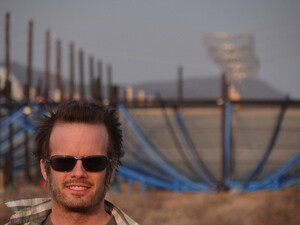
Daniel C. Jacobs
Dr. Jacobs is a Professor at the School of Earth and Space Exploration at Arizona State University and the Associate Director of ASU’s Interplanetary Initiative, serving as director of its smallsat lab. He earned his PhD at the University of Pennsylvania.
Danny received a BS in Physics from New Mexico Tech, a Masters in Physics from Montana State University, and a PhD in Physics from the University of Pennsylvania. He is currently a professor of astrophysics at Arizona State University where he co-directs the Low frequency Cosmology Lab and directs the Interplanetary Lab, ASU’s cubesat lab. He is the project scientist of the Hydrogen Epoch of Reionization Array (HERA), PI of the ECHO drone calibration project, and co-I of the SPARCS UV space telescope. Past projects include the PAPER 21cm experiment, DORA/RAE-1 cubesat and the Lightcube cubesat. In 2025 he was awarded the Presidential Early Career Award (PECASE), the highest honor given to early career scientists, and promoted directly from Assistant to Full Professor. He was born and raised in Omaha, NE where he was captain of the debate squad.
The title of his talk is
TDIY Instruments for Cosmology and Exoplanets from the Outback to Outer Space
Abstract: It seems that more than ever scientific progress is the domain of mega projects that take years of planning and thousands of people. There are still many questions which can only be tackled by a dedicated instrument. New levels of invention and cleverness become possible when a project is small enough for the builders to understand all the parts. Recently I have worked on instruments to resolve persistent open questions about the early universe and the space weather of exoplanets. The Hydrogen Epoch of Reionization Array (HERA) is targeting 21cm emission from primordial atomic Hydrogen prior to its ionization by the first stars. HERA aims to understand the first stars and improve constraints on the total neutrino mass. The instrument has been observing for 6 years in South Africa. Most recent results include data points from redshift 20, the epoch of the first stars. Another open star question is the true habitability of planets around M-Dwarfs, the most common type of star. It is known that such stars flare much more often than our star, but details are scarce. The SPARCS cubesat, launched six months ago, is monitoring M-dwarf stars in the ultraviolet for flare activity. SPARCS is the first space telescope to be built by a university. It is also a first flight of a new kind of delta-doped CCD detector which is ten times more sensitive than previous kinds. SPARCS is operating now, carrying out a dedicated monitoring campaign, monitoring nearby M-Dwarfs for flares. In the future one can imagine combining these technologies to observe the radio spectrum from space. Large space-based radio telescopes, in free flight or on the Moon, have been on the drawing boards since the earliest days of space travel. Now with pathfinders in space and on the launch pad plans are taking shape. With modern technology, these pathfinder projects are still well within the reach of a small team.
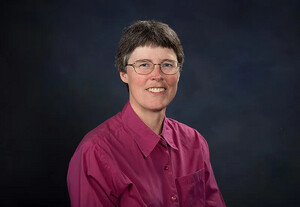
Ruth Skoug
Dr. Skoug, a researcher of Los Alamos National Laboratory’s Space Science and Applications group, earned her doctoral degree in physics from the University of Washington.
Ruth Skoug has been a staff member in the Space Sciences group at Los Alamos National Laboratory since 1997. At Los Alamos, she has worked on a range of space plasma and energetic particle instruments and missions, including the NASA ACE, Ulysses, IMAGE, TWINS, and Van Allen Probes. Her research focuses on solar wind particles and structures, magnetospheric plasma composition, the interaction of the solar wind with the Earth’s magnetosphere and the resulting space weather, and the development of space plasma instrumentation. She received a B.A. degree in physics and mathematics from St. Olaf College, and M.S. and Ph.D. degrees in physics from the University of Washington. She is a fellow of the American Geophysical Union. She currently leads the Solar Wind Electron instrument on the NASA IMAP mission, as well as the ZPS plasma spectrometer and ZEP energetic particle instruments on the LANL SABRS payloads.
The title of her talk is
Exploring the heliosphere: The NASA Interstellar Mapping and Acceleration Probe (IMAP) mission
Abstract: The NASA Interstellar Mapping and Acceleration Probe (IMAP) mission launched in September 2025 to study the acceleration of particles in the solar wind and the interaction of the solar wind with the local interstellar medium. The spacecraft, in orbit about the L1 Sun-Earth Lagrange point includes ten instruments, which together measure energetic neutral atoms from the boundary of the heliosphere, and solar wind ions, electrons, and magnetic fields. This talk will present an overview of the IMAP mission, together with initial results from both the in situ solar wind and remote neutral atom measurements. Solar wind measurements include real time solar wind measurements provide input for space weather predictions, and correlations with the 5 other spacecraft currently orbiting L1. Energetic neutral atoms allow remote sensing of the structure of the heliosphere boundary, providing new insights into the shape of the heliosphere and the origins of the enhanced ENA region known as the ribbon.
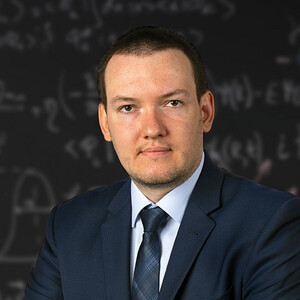
Nikolay Golubev
Dr. Golubev is currently an Assistant Professor of Physics at the University of Arizona. He earned his PhD at Heidelberg University in Germany.
Nikolay Golubev is an Assistant Professor in the Department of Physics at the University of Arizona. He received his M.S. degree from Moscow State University, Russia, and his Ph.D. from Heidelberg University, Germany. Before joining the University of Arizona in 2022, he held postdoctoral research position at the Swiss Federal Institute of Technology in Lausanne (EPFL), Switzerland. Nikolay’s research focuses on theoretical atomic, molecular, and optical physics, ultrafast science, and quantum dynamics. He develops theoretical and computational methods to investigate the interaction of intense ultrashort laser pulses with atoms, molecules, and solids, with applications to attosecond spectroscopy, ultrafast diffraction imaging, and nonequilibrium electron and coupled electron-nuclear dynamics. His research has been recognized with several prestigious awards, including the Branco Weiss Fellowship from ETH Zurich and the Early Career Award from the U.S. Department of Energy.
The title of his talk is
Ultrafast quantum dynamics in atoms, molecules, and solids
Abstract: Advances in ultrafast laser technology over the past several decades have enabled the observation of the properties and behavior of matter with unprecedented temporal and spatial resolution. In this talk, I will discuss our theoretical developments aimed at describing the quantum dynamics that occur during and after the interaction of atoms, molecules, and solids with intense ultrashort laser pulses. I will present several fully quantum and semiclassical approaches for simulating laser-induced electronic and coupled electron-nuclear dynamics in matter. Turning theory into practice, I will demonstrate how these methods can be used to probe ultrafast quantum dynamics through attosecond transient-absorption spectroscopy and attosecond diffraction imaging. I will present applications of our theoretical techniques to interpret recent pioneering experiments that resolve the structure and dynamics of matter with atomic spatial and attosecond temporal resolution. Advancing this area of research not only deepens our understanding of the fundamental processes governing matter but may also ultimately help us comprehend the diversity of the world and even the origins of life.